September 10, 2013

Congrats! AAJA 2013 National Journalism Awards

I was honored recently to receive an Asian American Journalists Association 2013 National Journalism Award for this story on Asian American chefs that I wrote for TheAtlantic.com. Even better was to be in the company of a group of print, radio and tv journalists whose outstanding contributions were a treat to read, listen to and watch.

I loved this piece that NPR freelance reporter Heidi Chang did on the music director Alexander Payne selected for his movie The Descendants. Payne discovered the enchanting Hawaiian music of the late singer and slack key guitarist Gabby Pahinui, and showcased him on the soundtrack, along with a roster of other past and present Hawaiian music standouts.

Fortune magazine writer Mina Kimes did a thorough investigative job on this story of corporate malfeasance and the deaths that resulted following illegal clinical trials and the off-label use of a type of bone cement.

Reuters anchor and reporter Fred Katayama delved into the science behind baseball's knuckleball to explain why it's so hard to hit, and Houston's KTRK ABC 13 reporter Adela Uchida filed this report on the Vietnamese American fishermen who were hit hard by the 2010 BP oil disaster,

Here's an introduction to all the winning pieces that Heidi Chang posted on YouTube, taken from the AAJA awards night gala. Congratulations to all!


September 3, 2013

Craft Food and Drink in Columbus, Ohio


  • New Yorkers and their urban counterparts on the West Coast think they have the market cornered on small-batch foods made by artisanal savants. But the truth is that superior handmade eats are being dreamed up by entrepreneurs in every corner of the country.

    In Columbus, Ohio, for example, where I spent a few days not too long ago, here’s what you can buy under one big roof:  a mango habanero Bavarian pretzel, bubble tea, goat cheese made in Cleveland, a Vietnamese bรกnh mi sandwich, and cherry lambic sorbet. Granted, this is one special roof, belonging to the not-for-profit North Market,  a 19th century wooden structure packed with 35 different vendors. Outside the downtown structure, an outdoor farmer’s market takes place every Saturday featuring the handiwork of 22 different farmers. It reminded me of Toronto's great St. Lawrence Market.

    Quiver Full Family Farm Buckeye popcorn.
    Rick Harrison Wolfe, who came on as North Market’s executive director earlier this year, was surprised at how developed the locavore movements was here: “I couldn’t believe how into it people are and how much they care” about where their food comes from, he notes. Part of it that may be due to the fact that if you drive 45 minutes from Columbus in any direction “you’ll hit a farm."

    Doug Denny's The Fish Guy's shop.

    Although North Market, which began in 1876, is the oldest farmer’s market in the city, the boom in the local foods movement has led to a mini-tsunami of markets. Up until probably ten years ago, North Market was the only game in town, says Wolfe. “Now," he adds, "just about every enclave has some sort of farmer’s market. There’s a full schedule for farmers."

    Increasing diversity—in the form of large influxes of Somali, Vietnamese and Latinos—has added color and excitement to the once white-bread food culture of the city, too.

    Mike Kast''s Curds & Whey.

    Wolfe, who returned to his Ohio roots after a career in the fashion industry and a stint as a food truck owner, has also been impressed with a revitalized restaurant and drinks scene. “I’ve been back for almost three years,” he notes, “and during that time at least a dozen super-interesting things have popped up close to downtown, some in neighborhoods that are being revitalized because of these restaurants.”

    Ohio residents receiving food assistance can shop at the market.
    Old-school Ohio pizza at Rubino's.

    One place he likes is Chris Crader and Bethany Lovell’s Harvest Pizzeria and craft cocktail bar Curio in the city’s German Village. While the traditional Ohio pizza (see photo above) sports a crust as thin and crispy as a cracker and cut into party squares, Harvest makes a thick-crust, chewier pizza showered with local meats and produce, many of the latter produced at the owners’ small farm.

    For more on the local craft foods movement, check out the Columbus Experience.

    Local favorite Jeni's Splendid Ice Creams

    The North Market is just one part of this scene, and one that Wolfe plans to grow selectively. With a finite amount of space in which to expand, he’s in the position of sifting through hundreds of applicants and selecting the best of the best upcoming food businesses, making the market an incubator for start-ups. “From this point on, it has to be about what do our guests need, what don’t we have?” explains Wolfe. If it’s not in that stack [of applicants], then I need to seek it out.” 

    North Market
  • 59 Spruce St.
  • Columbus, OH 43215
  • 614-463-9664
  • Website: http://www.northmarket.com


August 21, 2013

Bagging Bread, Stocking Shelves: Volunteering at the West Side Campaign Against Hunger

Pantry Masters Kerry Reid, Haydeth and Ruth Tavira.
Last week I dusted off my bread bagging and shelf-stocking skills and put them to work for a good cause, The West Side Campaign Against Hunger.

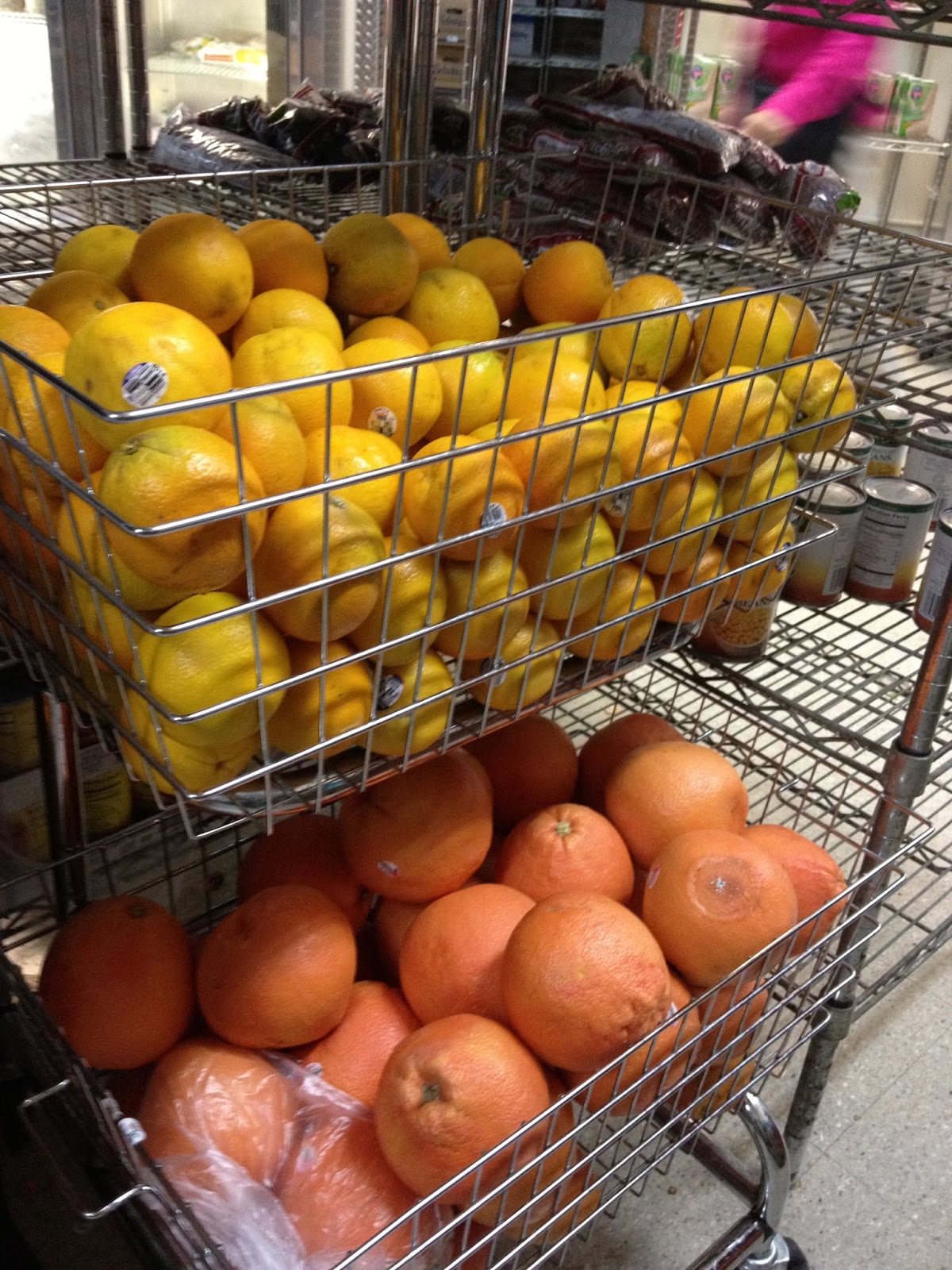
Instead of handing out pre-packed bags of groceries this worthy organization runs a supermarket-style food pantry that puts the emphasis on self-determination and dignity. Shoppers push carts through well-stocked aisles, dividing their choices evenly among eight food categories, their allotments based on family size.

No sloppy air pockets or ugly knots here. 
Serving between 200 and 300 families (averaging three to four members) a day, you can imagine how much food WSCAH goes through. My my son and I bagged giant bin after bin of beautiful bread donations collected by the food rescue organization City Harvest. Eli's Manhattan delivers their leftover bread directly, and Lincoln Square Synagogue congregation members deliver remaindered Orwasher's products.

Our supervisors were Pantry Managers Haydeth Tavira and Kerry Reid. Haydeth's seven-year old daughter Ruth was our demanding taskmaster, calling out any bread bags tied sloppily, or with too much air left in them ("They won't stay fresh like that!"). I worked in a bakery at one point in my life,  but no one there ever took quality control as seriously as this spunky, glasses-wearing little Latina girl did. The next day, alas, Ruth wasn't at WSCAH. Haydeth told us she had worked so hard the day before that she was at home sleeping. No doubt keeping on top of our sloppy work did her in.

Shoppers figure out how much of each type of food
they're allowed  on a point system.

Some of our fellow volunteers were also pantry shoppers; one of the smart things about the way the pantry works is that it is run as a customer cooperative. Helping out more than 25 hours a week at the pantry will earn you an extra food allotment.


Our other job was re-stocking continually emptying shelves with yogurt, coconut water, cereals, grain and fresh fruits and vegetables donated by local CSAs. Stewart Desmond, WSCAH's executive director proudly told us that in June the pantry received a Best Practices Award from the state's health department for providing healthy foods way above and behind required levels. You'll find plenty of fresh fruits and vegetables here, and no prepared foods, or foods high in salt and sugar.

WSCAH also offers a full range of social services, from helping clients arrange health care, identifying educational and job training opportunities, providing advice on financial matters and helping navigate New York's public housing system. The organization even offers exercise classes, nutrition workshops and chefs training classes.

The sobering news is that despite improvements in the job market and economy, an increasing number of New Yorkers are in need of WSCAH's services. When I wrote about the food pantry a little over a year ago in this post its resources were being stretched to the limit due to a 40 percent increase in demand over the previous two years. Now, says Desmond, "After a dip earlier this year we are rising again toward our highest [demand] level ever," which he says may reflect the economy's last quarter dip.


August 7, 2013

The Upside of the Cyberspace Echo Chamber


I love it when an article I write leads to the discovery of interesting new people, sites and blogs. Such was the case in the wake of my Atlantic.com article on eating invasive species.

An Oxford, England-based environmental geographer named Shonil Bhagwat, mentioned me in his blog, a thoughtful meditation on nature and culture in the anthropocene (a term adopted by ecologists to describe a new geological epoch dominated by the impact of humans). I've learned more from him about the importance of agrobiodiversity and wild crop conservation. Even weeds, he points out, are sacred because we'll need different, hardier species as our climate and geography continue to change.

In writing about out-of-control invasive species, Bhagwat notes that we can try to eradicate them, but another approach is "to reverse our gaze and accept that the invasives will continue to flourish alongside us. For a species of our size, we have changed the rules of the game by having a disproportionately large impact on the planet and in the process created space for other species like us."

I like that. Here we are bent out of shape that feral hogs or zebra mussels are so rapacious (for a list of the most destructive alien invasives, check this out). They might well be thinking in disgust, "that's the pot calling the kettle black."

Here's another example of the ability of social media to bring together worlds within worlds: When my Edible Manhattan profile of catering company Great Performances and its visionary CEO Liz Neumark appeared, it was picked up by a site I'd never heard of called The Triple Bottom, named after the term coined to describe a certain type of organizational success that equally values people, profit and planet. Browsing that fascinating site brought me to similar sites, like Triple Pundit, and this article on how increasing the number of women on corporate boards increases both profits and sustainability.

The only downside to all this connecting? When you fall down one of these virtual rabbit holes, it can be hard to get any work of one's own done.

July 22, 2013

Michael Anthony's Gramercy Tavern Cookbook

Chilled corn soup.
Outside the air was shimmering with heat and humidity but inside the private dining room at Gramercy Tavern it was all chill, from the refreshing corn soup to the lemon verbena granitรฉ. The occasion was a recent lunch introducing The Gramercy Tavern Cookbook, written by executive chef Michael Anthony.

The book, to be released in October, is a handsome collection of recipes, mini-profiles and stories published by Clarkson Potter. Union Square Hospitality group founder and co-owner Danny Meyer writes in his introductory history of the restaurant that he visualized his second restaurant as "the love child of Taillevent and Union Square Cafรฉ," a combination of the casual spirit of the first and the elevated services and fine dining of the second.

Watermelon and beet salad.

Anthony told his lunch guests that he strives for the simplicity of home cooking at work, noting, "If we have the courage to cook at the restaurant the way we cook at home then we're a success. It's the opposite of what you would think." 

Anthony cooks at home for his wife and three daughters, and says he's excited about joining the Norwich Meadows Farm CSA and cooking from its offerings.

Flounder with marinated cucumbers and yogurt sauce.
I wondered if any of Anthony's experiences cooking in Japan made it into his book. He does write memorably about his impoverished days as a young cook living on the far outskirts of Tokyo and befriending a middle-aged Japanese woman. She dragged him to meetings of her "culture club," where he traded English lessons for instruction in both Japanese and Japanese home cooking, and "excursions with their straw-hat hiking club."

"Japanese people eat an amazing variety of carefully prepared foods every day, but that kind of home cooking hardly ever finds its way to Japanese restaurants in the United States," writes Anthony. He lists a few of key ingredients from those Japanese ladies' home kitchens that he loves most, and that have made their way into his pantry, including the very practical bottled shiro dashi, a mix of dashi (the basic building block of Japanese cuisine, a broth made of bonito flakes and dried seaweed), soy sauce, sakรฉ and other seasonings.  He likes to use shiro dashi to season fish and sauces.

Lemon verbena granite with blueberry sorbet.

The Gramercy Tavern Cookbook includes Anthony own dashi recipe, used in the book for a dish of halibut and radishes in beet dashi.

Now, says Anthony, he's fascinated with Korean cuisine. I'm looking forward to seeing how those influences might eventually appear on the Gramercy Tavern menu.

June 11, 2013

The Amazing Tokyo Basement Food Hall


One of my favorite memories of living in Tokyo is of wandering the eye-popping aisles the depachika, department store basements that are traditionally devoted to prepared food, produce and groceries. In Japan's culture of incessant gift giving, the depachika is handy for dropping into and buying the box of luxury rice crackers, container of Kyoto pickles or Japanese and western confections to take on your next social visit.

So I jumped when chef, sommelier, shลchลซ advisor, and now Tokyo food guide Yukari Sakamoto offered to take me on a quick tour of the Shinjuku Takashimaya's depachika during my recent trip to Japan. Yukari is also an author: she wrote a great book on Tokyo food culture, Food Sake Tokyo, which I wrote about in this post.

The first thing we saw were some amazing Muscat of Alexandria grapes (pictured above), sugared on the outside to look like gorgeous pieces of frost-covered Venetian glass, and much too beautiful to eat. The grape is from an ancient, genetically unmodified vine and its pure flavor is highly prized in Japan, where it is grown in greenhouses. Just take a look at this review of a Muscat of Alexandria-flavored KitKat bar, and you'll see how the glamorous globes have infiltrated every level of consumption in Japan. 


There were other beautiful fruit preparations, too, like these white peach halves suspended in kanten, or  arrowroot gelatin.


The famous Kyoko kaiseki restaurant Kikunoi has a pretty space in the Takashimaya depachika, and we swooned over not only the take-away foods on offer, but the gorgeous bowls they were served in, like this Oribe bowl, lower left, which held  unohana, a dish of okara (tofu lees) simmered with dashi, usukuchi (lighter in color but saltier in taste) soy sauce and mirin. This is a classic dish from Kyoko, which is famous for its tofu, explains Yukari. My grandmother made this dish with strips of carrot and I think bamboo shoots, and I always liked its taste and texture, which was slightly nubbly. Next to the unohana in the picture are bowls of kiriboshi daikon and hijiki.


When it comes to buying beef, most Americans can only dream about the kind of transparency that's  found in Japan. Check out the picture above. When you buy this kind of extravagatly-marbled beef at Takashimaya, the individual identification numbers of each type of meat is posted. You can then go to this site, input the ID number, and up pops information on your meat, from breed, gender, and date of birth to the hometown of the animal and location of its raising facility. Yukari says she's seen information on what the cow was fed, too, though that information doesn't seem to be included on this site. 


In the fish department each individually wrapped serving of sashimi is carefully labeled so that buyers will know the name of the four different types of fish included. When there are several different kinds of white fish, the labels can be helpful. While we've heard plenty of reports of mislabled fish in America, Yukari says this is not a problem in Japan. Her husband Shinji, a fishmonger and former Tsujiki fish market buyer "was always pointing out mislabeled seafood to me at American seafood counters," she recalls.

It the US, Yukari adds, "Sadly many people handling seafood have no idea what they are working with." The large variety of seasonal seafood in Japan has bred more knowledgeable fishmongers, and home cooks will even change up their cooking methods for a fish depending on when during the seaons it's purchased. "For example," she says, "katsuo (skipjack tuna) has a lean season and a fatty season," and preparation would vary accordingly. 

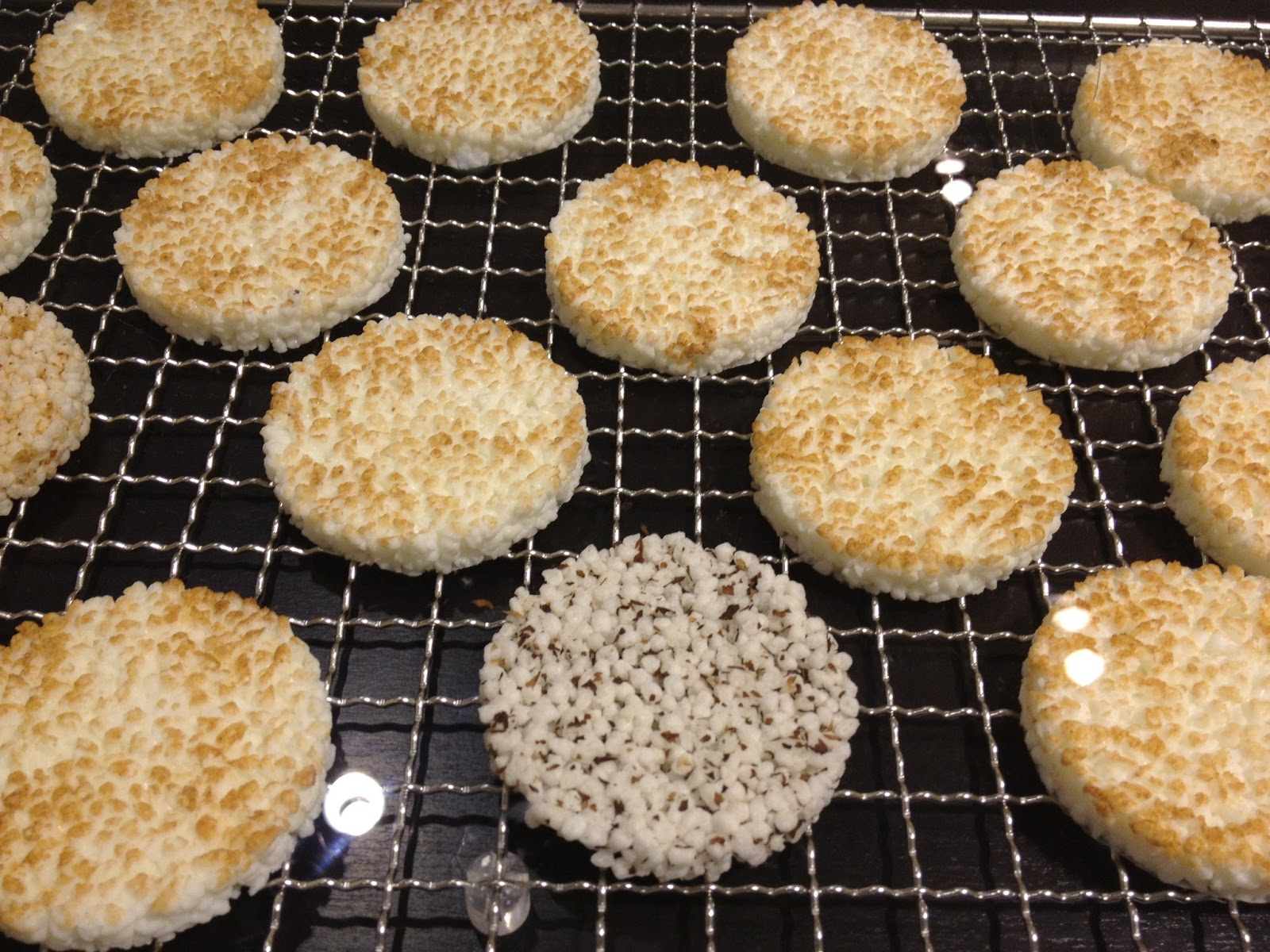
Here's a refined version of the puffed rice crackers that you can find in American health stores. 


International cuisines are not totally shunned, either. The shellfish in this paella kit looks better than anything you can  find in New York.

I learned a lot more on my tour, but this is probably more than enough for you. Thanks again for the great tour, Yukari!


May 28, 2013

In Tokyo, Mixologizing with the Seasons

Gen Yamamoto, ready for business.
One of the best parts of a highlight-filled trip to Tokyo recently was dropping in on Bar Gen Yamamoto. Gen joined David Bouley's New York City team in late 2010 and the following April helped open Brushstroke, Bouley's French-tinged play on kaiseki cuisine. There, he specialized in fruit- and vegetable-based cocktails that were remarkable for their elegance and subtlety. I was a fan in New York, and curious to see what new concoctions the gifted mixologist had up his freshly-pressed sleeve in Tokyo.

He's set up his welcoming eight-seat bar in Azabu-Juban, a neighborhood where remnants of old Japan collide with  embassies, cafes and an international mix of residents. To the delight of his followers, he's also extended his range with a cocktail list that serves as a guide to the agrarian bounty of his native country.

We tried a four-course tasting menu (¥4,200, six-course is ¥5,800) which started with a refreshing mix of cucumber from Ibaraki, Kumamoto cantaloupe, Okinawa hiba-chi pepper, and Kawabe rice shochu. The latter is from a region in Kumamoto Prefecture known for its pristine waters.

 Fruit opener: cucumber, cantaloupe, hiba-chi pepper, rice shochu.

Full of beans: Ehime fava, kinome, junmai ginjo Raifuku.

Excited about the range of produce he has access to from all over Japan, Gen raves about the softness the tomato water he extracts from Ishiyama tomatoes that are now in season. He pays close attention to the condition of each tomato, and depending on variables such as when in the season they are picked and when in the tasting service he places it, he may use one of seven different tomato cocktail recipes. "The main thing is that I'm always looking for improvement and trying to surprise my guests," he says. The one we sampled included both fresh tomato, a housemade confiture of tomato, shiso and Rives Spanish gin. 


Not your mom's bloody Mary: Tomato cocktail

Another of Gen's finds is raw Kumano dogwood honey. The trees' flowers produce enough honey for bees to collect only every four years, resulting in a denseness of flavor that he likes combined with Ehime new summer orange (the flavor of which is somewhere between yuzu, grapefruit and lemon), mint and Torikai rice shochu.

The "dessert" course: summer orange, Kumano honey, mint, rice shochu 

Gen himself brings to mind a latter-day Jeeves, an unflappable master of his trade who never seems to break a sweat. While he is tall and lean, however, his creations are uniquely round and soft. They don't deliver the blunt alcoholic KO that many drinkers seek, but creep up on you in stockinged feet; their impact can therefore come as a surprise at the end of the evening. 

The room Gen has created is remarkable as well, anchored by an beautiful, broad bar fashioned from a 500-year-old Japanese oak (mizunara) tree. Beige walls and minimal adornment complete the setting, making Bar Gen Yamamoto a soothing refuge where you can relax and converse with your fellow guests and host while sampling his quietly astonishing cocktails.

Bar Gen Yamamoto
1-6-4 Azabu-Juban
Minato-ku Tokyo 
03-6434-0652
website: www.genyamamoto.jp